![]() |
| Glass mosaics in Aachen Cathedral |
the journey of finding my ancestors... all the people who came before me to make me who I am
30 December 2016
Aachen and Charles Nicholas Weiss
18 August 2016
Who was Jane Wise?
Why did I leap to that conclusion in the first place? Circumstantial evidence - he's the right-ish sort of age to possibly be her father, he worked at Blenheim Palace, as did Bartholomew (and also his father Bartholomew as well), plus Jane and Bartholomew had a daughter named Patience - the same name as Henry's wife.
I researched the names of Henry and Patience Wise's children, and found details of eight of a possible twelve children. None called Jane, and perhaps tellingly, none who named any of their children Jane, after a possible aunt. I read wills of family members, including distant relations, and none clearly referred to a Jane as a daughter of Henry and Patience. Both Henry and Patience's wills named all their living children, and grandchildren, none of which included Jane or any of her children. I delved into all the parish records I could, all the historical records regarding the family that I could find, particularly focusing on records of the day, but there was nothing.
And yet, there is still the possibility Jane Wise is related to the family of Henry Wise, though I have concluded it is more likely that she is a niece of Henry's. To explain why I think this, I will set out all the information I know about Jane.
It is not known when or where Jane Wise was born. She married Bartholomew Peisley in 1717, on a date soon after 2 October, when their marriage license was issued in the Diocese of Canterbury. The location of the marriage is unknown, however the marriage is not recorded in the parish records for St Michael's at the North Gate, Oxford (LDS British film 416724), where some of their children were baptised and some were buried. In the table of information for their known children below, dates in italics are inferred dates, and note too that spelling in the parish records is variable.
| Date of birth | Date of death | Name of child | Parish record entry |
|---|---|---|---|
| ~1717-1718 | 1718 | Bartholomew | Burial: 1718, July 3, Bartholomew Peizly, jnr. in ye church |
| ~1717-1719 | Apr 1719 | Thomas | Burial: 1719, April 8, Thomas, son of Bartholomew Peizley, in ye church |
| 1721 | unknown | Patience | Baptism: 1721, June 3, Petience d. of Mr Bartholomew Peisley a stone cutter and Jean his wife |
| 1722 | 1781 | Bartholomew | Baptism: 1722, June 10, Bartholomew s. of Mr Bartholomew Piesley, stone cutter and Jane his wife |
| 1724 | unknown | Richard | Baptism: 1724, April 27, Richard son of Bartholomew Peisley, stone cutter and Jean his wife |
| ~1727 | 1727 | Sarah | Burial: 1727, November 4, Sarah, dau. of Bartholomew Peisley, infant, in ye church |
Jane's husband Bartholomew Peisley died aged only 44, on 29 August 1727. The Oxford diarist Thomas Hearne wrote in August 1727 "Yesterday died of a feavor, or rather (as I hear), of the Gout in the Stomack, after 4 or 5 days illness, Mr Peisley, a noted wealthy mason, that lived in New-Inn Hall Lane in Oxford, leaving a wife (a very pretty woman) and three Children, and his wife is big again. ... This Mr Peisly was looked upon as a very courteous well behaved man." Obviously Jane was pregnant with Sarah at the time her husband Bartholomew died, and Sarah then died in November as well.
When Jane remarried in 1731 in Oxford, to George Huddesford, Hearne wrote "On Thursday last, Mr Hudsford, President of Trinity Coll., was married in that College chappel to the widow Peisly (who has three children living by her former Husband, a Mason) a very pretty woman, of Oxford." Jane and George Huddesford had a son William, born in 1732.
Jane died in Oxford in 1740, and was buried on 2 March 1740, possibly at St Mary Magdalen's churchyard, Oxford.
So why do I think she was related to the Henry Wise family?
Henry Wise's will (dated 1739) mentions a niece Jane Hunsford. I can't work out who that might be, apart from Jane Huddesford, complete with spelling difference.
Jane's brother, Reverend Bernard Paisley (1689-1738), in his will, mentions his nephews Richard and Bartholomew Peisley (Jane's sons), and leaves an amount of money to each of them, and if they are still minors at the time of his death, in trust for them to Mathew Wise Esq and the Reverend Mr George Huddesford. George Huddesford is their stepfather, and Mathew Wise Esq happens to be the son and heir of Henry Wise. So that really does suggest that Jane is related in some way to the Henry Wise family, if Mathew is partially in charge of the inheritances of Jane's sons.
And then there is the naming of Patience Peisley, perhaps after her maternal great aunt.
I shall keep searching for links between Jane Wise/Peisley/Huddesford and the Henry Wise family, but I think I may have exhausted all current evidence available on the internet. Further research I'd like to do at some stage is to visit graveyards in Oxford, and also to thoroughly scour Oxford parish records for information relating to the Peisleys and Wises.
24 December 2014
A painting of Jean Gaspard Weiss
Living here in Germany, we are about an hour's drive from Mulhouse in France. The other day I took the opportunity to visit Mulhouse, and start ticking things off my family history bucket list!
First thing on the list was to visit the Musée Historique to see the painting of Jean Gaspard Weiss, my 4x great grandfather. The museum staff showed me where the painting was, as I asked about it, and then I told them that he was my great great great great grandfather, which was met with an exclamation of great surprise! They told me all about him, all stuff which I already knew of course! But it was amazing to see the painting in real life. Today when I Skyped my family back in Australia, I compared the faces of his descendants with my photo of the painting. Yes, there are similarities, even taking into account that it's not the best painting I've seen of him.
I also walked across the square to the Temple St Etienne, where Gaspard Weiss' father was a church musician. It was amazing to think of him in there, playing, over 200 years ago.
So there's plenty more for me to see and do in Mulhouse, but I'm saving those for another time. There will be plenty of opportunities.
06 April 2014
How I am related to the embroidery thread company DMC
My sister and I are accomplished embroiderers, and I have been aware for some time that there was a good chance we were related in some extremely distant way to the founders of the embroidery thread company DMC. Last night my sister and I were talking about it, and she challenged me to work out exactly how we were related. I thought it would take ages. Happily it didn't!
DMC (Dollfus Mieg and Company) is a company that was founded in Mulhouse in 1746 by Jean-Henri Dollfus, an artist, Jean-Jacques Schmalzer and Samuel Koechlin, both businessmen. When it was founded the company was known as Koechlin, Schmalzer and Company. It was run jointly by Jean-Henri and his brother Jean Dollfus, and towards the end of the century Jean's son Daniel took over running the company. Daniel Dollfus married Anne-Marie Mieg in 1800, and added his wife's surname to his own, to become Daniel Dollfus Mieg. The company was given the new trading name of Dollfus Mieg and Company - D.M.C.
So how am I related to DMC? Jean-Henri Dollfus, one of the company founders, was the great grandfather of the wife of my first cousin 5x removed. To put it in a way that is hopefully slightly easier to comprehend, Jean-Henri's great granddaughter Sophie-Louise Dollfus married Médard Baumgarten, who was the nephew of my 4x great grandfather Gaspard Weiss.
So every time I sit down to sew with some DMC threads I will now be able to bask in the glow of my familial relationship to the company that made the threads!
13 November 2012
Trove Tuesday: George Beringer's prize for art
Amy of Branches, Leaves and Pollen started up Trove Tuesday a while ago - the aim being to write about things of interest found on Trove. I think it's a great idea so I thought I'd join in.
I was searching for references to the Beringer family today and came across a lovely article about prizes given at North Granville Superior Public School in 1906. The article is quite long so I am showing the opening paragraph and then the important one - to me anyway!
![]() |
| 1906. North Granville S.P. School Prize Distribution, The Cumberland Argus and Fruitgrowers Advocate, 21 April, p. 2, viewed 13 November 2012. http://trove.nla.gov.au/ndp/del/article/85934165. |
So it appears that George Beringer - who was later known as André de Beranger, silent film actor - always had an artistic bent.
And I must say, I do like the reason for Reginald Towle's prize.
24 June 2012
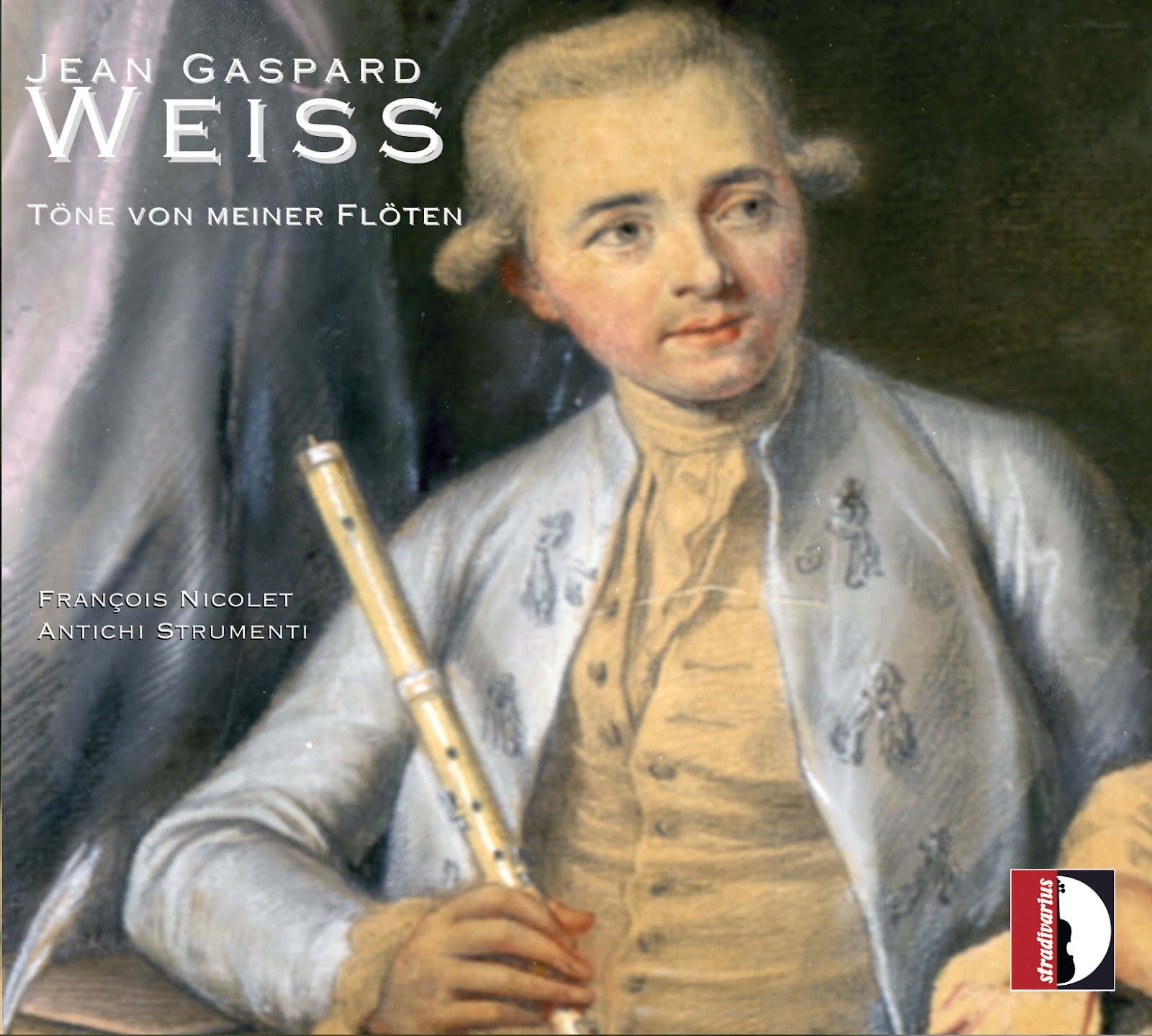
A CD of Gaspard Weiss' music
![]() |
A new CD has just been released by Stradivarius of my great great great great grandfather Gaspard Weiss' music. This is the first CD ever dedicated solely to Weiss' music. I have ordered a number of copies from Tobias Bonz of Antichi Strumenti, the ensemble who performed on the CD. I can't wait to get my very own copy and play it!
Should you be interested, you can listen to excerpts of the tracks here. I didn't expect that I would like it so much! Not being hugely learned in music, I was envisaging something like Jane Rutter's flute music, which really does nothing for me. However, the German flute played in the pieces sounds, to my ear, a whole lot more like a recorder than today's flute. Plus, I do like that era of music. I recommend it wholeheartedly. Beautiful, beautiful.
The CD is available from Stradivarius, Antichi Strumenti and on iTunes.
15 June 2012
An engraving of Charles Nicholas Weiss
I borrowed something precious from my great aunt on the weekend. She has in her possession an engraving of Charles Nicholas Weiss. I scanned it, and present it below.
The caption is "Charles N. Weiss. Engraved by F. McCabe from a Drawing by Charles Hayter. London"
Charles Hayter (1761-2 December 1835) was an English artist who specialised in portrait miniatures. He was appointed as a Professor of Perspective and Drawing to Princess Charlotte, daughter of King George IV.
There is very little information available on the engraver McCabe, however I believe he was also known as E.F. McCabe and worked in the 1820s. Two of his engravings are held by the British Museum.
If this engraving was done in the 1820s Weiss would have been about 30-something. The most obvious feature on his face is the hooked nose. Interestingly, my late great aunt, Weiss' great granddaughter, had the same shaped nose.
Edited on 16 June 2012 to add:
It suddenly occurred to me to ask my great aunt what she had known about the subject of the engraving. I rang her this morning and asked her. Her father had believed it was of his grandfather (correct). Family legend said that Charles Nicholas Weiss had gone through three fortunes in his lifetime (possibly correct - who knows?!), and her father was of the understanding that he was "pretty musical" (correct). So despite the family not really having any idea of the fame that Charles Nicholas Weiss had in his day for his flute playing, clearly a little information filtered through, down the generations. My great aunt said that they used to have it framed and hanging on the wall, and then it was put into an album. I'm glad she realised it was important enough to keep!
26 May 2012
Gaspard Weiss and J.C. Bach
In an article on my 4x great grandfather Gaspard Weiss (1739-1815) in Sortir à Mulhouse (which appears to be a newsletter on some sort of cultural program for Mulhouse - its in French so I'm not completely sure!), number 36, a reference is made to him being one of the musicians who interpreted Amor Vincitore before King George III. I tried to find information on this a while back but was unsuccessful.
I've just come across a new reference to this in "Clarinet in the Classical Period" by Albert R. Rice (2008). Amor Vincitore was a cantata by Johann Christian Bach - youngest son of Johann Sebastian Bach. Rice writes that two movements of the piece have solo parts which were written for four virtuosos - Karl Weiss (flute), Johann Christian Fischer (oboe), Josef Beer (clarinet) and Georg Wenzel Ritter (bassoon). "Karl" was a German form of the French name "Gaspard", and there are other references to Gaspard Weiss as "Karl Weiss". Gaspard Weiss often worked with the oboist Fischer. Rice also says that in 1774 Amor Vincitore was performed in Carlisle House in London (on April 15), at a benefit concert for Fischer, and at a private performance for the royal family. Obviously if you were having your new cantata performed for the royal family you would make sure it was being performed by the musicians it was written for - hence we know that Weiss almost undoubtably did play for King George III.
I still have no definitive proof that Gaspard Weiss was the principal flautist for King George III as claimed by his son Charles Nicholas Weiss, in his letter to the music dictionary publisher John Sainsbury. Perhaps if the claim was an embellishment of the truth, this may have been the event Charles was referring to.
12 April 2012
A new book on Gaspard Weiss

Yesterday in the mail I received a new edition to my family history library: the autobiography of Gaspard Weiss. I was terribly excited to have in my hands the autobiography of my great great great great grandfather! Pity it is in German and French and I can't read either! However, Tobias Bonz, one of the editors, has acknowledged my small assistance to his research in a couple of footnotes to the text and I could certainly find my name!
Should you be interested in obtaining a copy it is published by Ortus Musikverlag and the ISBN is 978-3-937788-23-4, retailing for about €25.
03 March 2012
George Beranger makes the news
My relative Bryony Cosgrove could be my great great uncle George Beranger's publicity agent. It's only about 100 years too late for his film career, but that's not her fault! After all the publicity the new silent movie The Artist has generated recently, Bryony has written a piece about one of Australia's forgotten silent movie actors (Great Great Uncle George) which was published today in The Age newspaper (and also online at the Sydney Morning Herald).
30 January 2012
Gustav Holst
Gustav Holst (1874-1934) was my second cousin three times removed. He is from the musical branch of my family - Benigna Weiss née von Holst being his great aunt. Gustav Holst, born Gustavus Theodore von Holst, was a British composer, most well known for his work The Planets, the most famous part of it being Jupiter, with the well known "hymn" I Vow to Thee My Country set to the music of Jupiter.
Last year a documentary on Gustav Holst was produced: Holst - In the Bleak Midwinter, by Tony Palmer. I recently received a copy on DVD from my sixth cousin once removed, Harro Lange, a fellow Holst/von Holst-family researcher. The documentary is brilliant. I learnt so much about Holst, and have a new appreciation for his music. Commentary on his life is interspersed with interviews with people who knew him, including his daughter Imogen Holst, and also with performances of his music. You get a very good idea of the cross-section of music that he composed throughout his life, connected with his own experiences and world-view. I also think the Morris Dancing portrayed in the documentary was quite hilarious. I think the British have a different view of manliness than Aussie men!
I recommend Holst - In the Bleak Midwinter to you, if you have any interest in Holst's music, or British composers in general.
26 December 2011
2011 - The year in review
So much has happened this year - I've found out so many new things about my family history - that I thought I would review my research, and highlight the most intriguing and/or amazing bits.
Best Performance in a Television Series:
Thomas Wickham (1888-1973)
Thomas Wickham was my great great uncle. He was a policeman in Sydney and worked as a detective sergeant in NSW's first drug squad. He was portrayed in the television series Underbelly: Razor. I didn't watch it, but as far as I know, he's my only relative who's been dramatised in a television series!
Story That Still Leaves Me Gobsmacked That I Uncovered It:
Charles Nicholas Weiss (1789-1845) and Gaspard Weiss (1739-1815), flute virtuosos
Charles Nicholas Weiss (my great great great grandfather) and his father Gaspard Weiss (my great great great great grandfather) were both very talented flautists. Both born in Mulhouse (now part of France), they both trod a path through Italy and Geneva to England where they achieved a level of fame for their musical skills. Gaspard retired back to Mulhouse, Charles joined the British Army and died young in India.
I still am amazed at what I uncovered on Charles Nicholas Weiss. The family had a vague idea that he was born in Prussia (wrong), and was in the army and died in India. I don't think anyone really realised that he was a (then) famous flautist, who joined the British Army as a bandmaster because of his musical skills.
Plus, I've never explained how I found out about Gaspard Weiss, his father. I had worked out that Charles had been born in Mulhouse, so I found a local Alsace genealogical society (Centre Départemental d' Histoire des Familles) and sent them an email asking if they had any information on him. A few weeks later I received an envelope in the mail from them, containing all they had on him: a photocopy from "Nouveau dictionnaire de biography alsacienne", which had a short biography on him. However, the startling thing was that it noted that Charles Nicholas Weiss was the son of the entry before: Jean Gaspard Weiss. And that is where I discovered his possibly even more famous father, Gaspard Weiss. Just because I happened to send an email to a family history society in Alsace.
Ancestor I Would Have Most Liked to Meet:
Caroline Beringer (c1857-1896)
Caroline was my great great grandmother. She came to Australia from Germany with her husband and two young children. She had more children once they were here, but Caroline tragically committed suicide when only 39 years old. I imagine it was a combination of loneliness, homesickness and post-natal depression that drove her to it. I would like to think that, had I been alive, I would have been able to befriend her.
Ancestor I'd Most Like to Find Out More About in the Coming Year:
Margaret Kirkwood Macindoe (1883-1929)
Maggie was my great great aunt. She was born in Scotland and came out to Australia with the rest of her family at a very young age. She died in Callan Park Mental Hospital in Rozelle, NSW, aged just 46, having been hospitalised a number of times in her life. I'm not expecting to get access to her medical records because there is a 100 year restriction on access to medical records, but I'd love to find out why she was in the mental hospital. I can't imagine that it was a good place to die.
Death Bed Message That I'd Love to Read:
Thomas Macindoe (1841-1901)
Thomas Macindoe was my great great grandfather. He was a difficult man, who'd been brought up by an alcoholic mother, and whose wife also turned to drink. Upon his death there was a death bed message that was supposed to published in the newspapers. His children went to court over his will and frittered away all the inheritance, apparently leaving no money for the publication of the death bed message. I'd love to know what it said! It is supposed that it was probably about the evils of drink, but that's just guessing.
Relative Who Met the Most Unusual Death:
Theophile Augustus Naudin (c1845-1880)
Augustus Naudin was the first husband of my great great grandmother. After Augustus died she later married the man who was my great great grandfather. Augustus was eaten by cannibals in Papua New Guinea, leaving behind two wives (whom he bigamously married) with 5 or 6 children as well. They were possibly better off without him!
12 December 2011
André de Beranger's war service
André de Beranger, silent movie actor, was actually my great great Uncle George - born George Augustus Beringer. I have previously written about him here.
A relative, Bryony Cosgrove, has done quite a lot of research on "Uncle George", and has just had an article on him published: "Missing in Action, Caught on Film: Silent Film Actor "André de Beranger" Goes to War".
17 November 2011
(Jean) Gaspard Weiss
Ages ago I wrote about an article that I had found which showed that at least one other person in the world was interested in Jean Gaspard Weiss. Tobias Bonz is a German cellist who has rediscovered the music of Jean Gaspard Weiss, through works held in the British Library. He has also found an autobiography of Weiss, held in the archives of Mulhouse.
One of the things I have learnt from Tobias is that Jean Gaspard Weiss called himself Gaspard Weiss, dropping the "Jean". This has been hard for me to get used to, because my research first found him as Jean Gaspard Weiss, but from now on I shall try to refer to him as Gaspard Weiss.
Tobias leads a baroque ensemble called Antichi Strumenti, which has been playing some of Gaspard Weiss' music. They have recently made a recording of some of his works, which I hope to get a copy of, as I have not yet heard any of his music!
Tobias has given me the names of all fifteen of Gaspard and Marie Weiss' children which is fantastic new information - previously I only had names of eight of them. Tobias believes that the information I have found on the son Gaspar Weiss actually refers to Willoughby Gaspard Weiss. I'm not yet convinced, but he's read the autobiography and I haven't, so I guess that trumps me!
The children of Gaspard and Marie Weiss were:
Charlotte Mary, born 30 June 1776 in London. It is believed Charlotte died young, probably while the family was still in England. Charlotte is portrayed in a painting of the family.
Gaspar, born 12 September 1777 in London. Tobias believes Gaspar also died young.
Mary Ann (Marie Anne), born 6 September 1778 in London. Mary Ann married Godefroi Hofer in Mulhouse, and died in 1839.
Sarah Elizabeth (Elisabeth), born 19 May 1780 in London. Details and the date of her death are unknown.
Willoughby Gaspard, born 12 May 1782 in London. Although it is extremely likely that Willoughby Gaspard travelled with the rest of the family to Mulhouse when they returned there in 1783, at some stage he did return to England and worked as a music dealer, and in 1814 he married Ann Hunter at St Oswald, Chester, in Cheshire, England. Willoughby and Ann had six or seven children, including the famous opera singer Willoughby Hunter Weiss. Willoughby Gaspard died in Nantwich, Cheshire on 25 March 1853.
Jacques, possibly born 1784 in Mulhouse.
Jean Georges, born 12 June 1785 in Mulhouse. He married Barbara Blech in 1809, was briefly mayor of Mulhouse in 1843, and died 26 February 1874 in Mulhouse.
Martha, possibly born 1786 in Mulhouse.
Samuel, born 1788, presumably in Mulhouse.
Charles Nicholas, born 20 June 1789 in Mulhouse. My great great great grandfather. Moved to England, and married Benigna von Holst in London on 9 September 1828. He was a flautist, worked as a Professor of Music, and joined the British Army to serve as a bandmaster. He died in Bombay India, whilst stationed there, on 14 June 1845. Charles and Benigna had six children, the youngest of whom I am descended from.
Paul, born 1791, presumably in Mulhouse. Possibly died when he was seven years old.
Fréderic, born 1792, presumably in Mulhouse. Possibly died when he was six years old.
Jean Antoine, born 1794 in Mulhouse. Possibly died when he was four years old.
Guillaume, born 1797, presumably in Mulhouse. Possibly died when he was only one year old.
Rosine Angélique (she appears to have been known as Angélique), born 13 April 1798 in Mulhouse. Her mother died four days after the birth of Angélique, presumably from complications from the birth. Angélique married Jean George Schmaltzer in Mulhouse on 21 April 1826. They had at least one child, a daughter, who married into the Desaulles family. The autobiography of Gaspard Weiss appears to have been handed down through the Desaulles family until it ended up in the Mulhouse archives. The date of Angélique's death is unknown. The name "Angélique" was passed on down through many generations of her brother Willoughby's family - perhaps Angélique was Willoughby's favourite sister.
20 October 2011
A letter from the Queen
Well, not quite.
Back in August I decided to send a letter to the Royal Archives to see if they could confirm for me that Jean Gaspard Weiss was Principal Flautist for King George III. I wasn't sure if they would be able to say yes as it depended on whether he was employed by the King or by the Court. But even if they couldn't confirm it I would still get a letter from the Royal Archives!
Here is the reply, received today. I've put a photo of the envelope as well, mainly because it has the Queen's stamp on it!
And the letter itself in detail:

The diary extract the letter refers to from my original letter is this:
The Diary of James Harris (1709-80) as Secretary to Queen Charlotte, 3 May 1774, notes: "When I came into the Japan-wainscot room, I found it to my surprise filled with all the capital musicians - Bach & Abel, Cramer the celebrated violin, five or six violins, Gordon, and another violoncello, 2 opera double basses, hautboys, horns, tenors, Beir the clarionet, Richter the bassoon, Weiss the German flute, Fisher the houtboy, Millico & Grassi, & the chorus singers. When the concert began, the royal children (the younger part) stood arranged in the same room with the music - the King sometimes came out, & the Queen also..."
12 September 2011
Samuel Baumgarten, bassoonist
I have discovered that my musical pedigree goes back even further than I thought. And it makes me marvel at how the musical gene completely passed me by!
Samuel Christian Frederic (occasionally known as Christopher Frederick) Baumgarten (born c1729, location unknown, possibly Germany, died Jul 1798, London, England) was the father-in-law of Jean Gaspard Weiss, which makes him my great great great great great grandfather. He was a bassoonist and played in many professional concerts in London, was elected a member of the Royal Society of Musicians in 1750, and made a member of the Court of Assistants for the Royal Society of Musicians in 1790. Samuel Baumgarten should not be confused with another musician with the same surname who was working in London at the same time - Karl Friedrich (Charles Frederick) Baumgarten, who was a violinist, organist and composer, and was the leader at the Covent Garden Theatre. There is no evidence that they were related. I searched through over 600 historical newspaper articles with references to "Baumgarten". Many of the concerts listed only "Baumgarten" or "Mr. Baumgarten" so there are many that I am uncertain as to who it was, Samuel or Karl. Unhelpfully, some references actually mix the two of them together to create a conglomerate of a person who never existed as one individual!
Samuel Baumgarten married Mary Joynes on June 6, 1751 at St George's Chapel, Mayfair in London, and the marriage register notes they were from St James Westminster. St George's Chapel, Mayfair, was a chapel where clandestine marriages took place, without licence, banns or parental consent. The marriages were valid and binding, but were frowned upon. Goodness knows why Samuel and Mary were married there rather than at St James Westminster... Assuming that Elizabeth Mary was their first child, born in 1753, I shall infer that it wasn't a shotgun wedding! They had 11 children in total, including Charlotte (c1758 - 21 Feb 1837) who married Richard Huddleston Potter (10 Dec 1755 - Jun 1821), parents of Cipriani Potter, a composer, pianist and educator. Cipriani Potter tutored Matthias von Holst who was the nephew of the wife (Benigna von Holst Weiss) of his maternal first cousin (Charles Nicholas Weiss).
Samuel and Mary's daughter Marie, my great great great great grandmother, is one of their children for whom I cannot find a birth record. I have found information that suggests she was born in Nassau-Usingen, but I don't know what evidence that is based on. Certainly if that were the case she is likely to be the only one of the Baumgartens' children who was not born in London.
Samuel and his future son-in-law Jean Gaspard Weiss played in a number of concerts together in the years preceding the marriage of Marie and Jean Gaspard and it is reasonable to assume that they met through these music circles.
I have only been able to locate vital records (other than baptism records) for three of Samuel and Mary's children, all girls - Marie, Charlotte, and their sister Lucinda Worrall Baumgarten. All the other children seem to have disappeared without trace. There were many boys amongst the eleven children, but either they all died young, or didn't have jobs which caused them to advertise in the newspapers by name - of the historical newspapers I searched there were no notices that related to any children of Samuel and Mary's, apart from Marie's marriage notice.
02 September 2011
Mostly irrelevant, but funny
I found this in an article entitled Musical Intelligence in the Whitehall Evening Post, 17 July 1783:
Hayden [sic], next autumn, comes to London. Phlegm, and, in all pecuniary concerns, extreme caution, are among the leading characteristics of this great composer; insomuch so, that last winter he could not, without uncommon assurances, be prevailed on to send his new music over to Lord Abingdon's Grand Concert. Graaf, with Weiss and others, are gone to Germany and Switzerland for the summer; to return, however, to the Subscription Concert in Hanover-Square.
The "Weiss" it mentions is Jean Gaspard Weiss. Weiss returned permanently to Mulhouse in 1783, and considering the final subscription concert that I can find in 1783 was actually on May 21 (which, by my reckoning could be considered around the start of summer) I'm not sure that he actually did ever return to London for any more concerts that year. He certainly did not perform in any subscription concerts in London after 1783.
And I still have no idea why they were talking about Haydn's phlegm.
Update: Apparently "phlegm" can mean "calmness of temperament" as well as the mucus that comes out of the back of your throat. Who knew?!
01 September 2011
Jean Gaspard Weiss' marriage notice
I came across this today:
"Married:..... Yesterday Mr. Gaspar Weiss, of Greek Street, Soho, to Miss Baumgarten, of Craven Street, in the Strand." London Evening Post, August 24, 1775.
This is Jean Gaspard Weiss, marrying Marie Baumgarten. Before this I had found information that suggested they were married in Mulhouse, on September 20, 1775. The marriage notice above implies that the wedding took place in London, and was apparently actually on August 23, 1775.
24 August 2011
Jean Gaspard Weiss and his return to Mulhouse
Information I have recently come across (see my last post) gives me slightly more information on Jean Gaspard Weiss and his life upon his return to Mulhouse, after achieving great fame and wealth in England through his flute playing.
From 1347 to 1798 the city of Mulhouse was part of the city-state of the Republic of Mulhouse, independent from France and allied with Switzerland until the Grand Council of the Republic of Mulhouse voted to join the French Republic. During its time of independence the city of Mulhouse was a protestant (Calvinist) enclave which developed into a solid industrial city, based on the manufacture of Indian cottons, which were prohibited from importation, manufacture and use in France until 1759, despite and because of the enormous popularity of Indian cottons. So because they were prohibited but highly sought-after in neighbouring France, Mulhouse was well placed to manufacture them.
When Jean-Gaspard Weiss returned home to Mulhouse in 1783 he sat on the Grand Council of the Republic of Mulhouse, and later on the municipal council (presumably after Mulhouse joined France). Mulhouse's social and political elite had the Dollfus, Koechlin and Hofer families at the top. Of the three men who founded Mulhouse's first textile printing factory, producing Indian cottons, two were from these three families: Samuel Koechlin (who was the son-in-law of the one of the most distinguished mayors - bürgermeisters - of the Grand Council, Jean Hofer) and Jean-Henri Dollfus (who later became Bürgermeister himself) - this textile printing business led to today's internationally known embroidery thread company DMC (Dollfus-Mieg and Compagnie). When Jean Gaspard Weiss started his own textile printing factory he worked in partnership with Jean-Jacques Dollfus, Nicolas Dollfus and his own son Jean-Georges Weiss (which seems a little strange to me because the information I have on Jean-Georges says he was born in 1785...). However, it was clearly important to be well-connected, particularly with the Dollfus family, but despite this the business venture only met with marginal success.
It is interesting that Jean Gaspard Weiss was involved in the politics of Mulhouse. From March 9 to July 25 in 1843 a Jean Georges Weiss was interim Bürgermeister of Mulhouse - this may have been Jean Georges Weiss, son of Jean Gaspard Weiss. Certainly the son Jean Georges was alive in 1843 - he was born 1785, died 1874. Jean Georges Weiss also gets another mention in the history of Mulhouse - in 1805 he was was in command of the reorganisation of the "old body of gunners" (I think there may be something lost in the translation here... Réorganisation de l'ancien corps des canonniers, sous le commandement de Jean-Georges Weiss), and was in charge of the town fire engines, of which there were four. Of course, it is possible that this was a different Jean-Georges Weiss - Weiss was apparently a very common name in Mulhouse.
19 August 2011
Just keep on digging...
I've been searching French language sources such as Gallica and French stuff on Google for information on Charles Nicholas Weiss and Jean Gaspard Weiss. I don't understand French but Google Translator is extremely useful.
Anyway, I found this: "Les partitions musicales de Gaspard Weiss retrouvées" - see page 11. It seems that someone else is just as interested in Jean Gaspard Weiss as I am! We'll see what comes of this... I didn't think I'd exhausted the available information on him yet - it would appear that I was right!
November 2011 - Edited to add: Unfortunately this link appears to no longer work. It detailed about a cellist, Tobias Bonz, who had rediscovered the works of Jean Gaspard Weiss. See this post for further details.