16 July 2012

Bernard (not Benigna) Weiss

I recently bought a subscription to findmypast, as I have so many English ancestors it seemed like it could be worth it. So far I've found an awful lot more information. Today I stumbled upon a record alluding to one of Charles Nicholas and Benigna Catharine Weiss' children: the second child, who we've always assumed was a girl called Benigna, born about 1831.

Why have we assumed she was called Benigna? Good question. We know that the second child's name started with "B" because Charles and Benigna followed the alphabet in naming their six children - A through to F. However there is nothing official stating that the second child's name was actually Benigna - perhaps this was an assumption because "her" mother's name was Benigna. And why do we think she was a girl? No idea!

The records in question on findmypast are the Armed Forces BMD Details. Charles Nicholas Weiss went to India with the British Army in 1840, in the 17th Foot Regiment. I have records for the two youngest children, Egmont and Frederick, being baptised in Aden (now in Yemen, then part of British India). I also have a baptism record for the eldest child, Adelaide, in England, before the family left for India. Which leaves three more - children B, C and D.

The Armed Forces BMD records show four baptisms for the surname of Weiss:

Name Place Year Regt.
Weiss, Bernard J. G. Poona 1831 17th
----- Caroline J. Poona 1833 17th
----- Egmont J.T. Aden 1837 17th
----- Frederic A. Aden 1839 17th

Caroline J, Egmont J.T. and Frederic A. are all definitely children of Charles and Benigna Weiss. The years given are the years they were born, not the years they were baptised. Considering the year of birth for Bernard Weiss matches the B child of Charles and Benigna's, and the father of Bernard Weiss was also in the 17th Foot Regiment (and Weiss was an extremely uncommon name at the time in England), the chances of there being a second British Army member with the surname of Weiss stationed in Poona (now known as Pune) and in the same regiment as Charles, is highly unlikely.

So now we have definite details of the B child of Charles and Benigna Weiss - the child was male, his name was Bernard J.G. Weiss, and he was born in 1831. We must assume he was born in England as the family was living in either Liverpool or Manchester in 1831. I wonder if the "J.G." stood for Jean Gaspard, after his paternal grandfather?

We still haven't much on the D child - "Derby" according to the 1841 English Census - which, incidentally, Bernard wasn't recorded in. Considering Derby was still alive in 1841, presumably close to the time the rest of the family followed Charles to India (who arrived there in 1840), he either died before they left for India, or whilst they were in India, but before he was baptised with the others. Still not sure why the kids baptised in British India were done in two lots, one lot in Poona, the other in Aden...

Edited to add: I received an email from the British Library India Office in reply to an enquiry I sent them which confirmed that Bernard James George Weiss was baptised in Poona on 27 December 1840, along with his sister Caroline Judith Weiss. This suggests that the family may well have travelled to India at the same time as Charles, not later after the 1841 Census, as I had originally thought. That Bernard is not in the 1841 Census suggests that he may have died by that stage. I still don't know when or where Derby was baptised, considering he was in the 1841 Census when Bernard wasn't...

13 July 2012

Henry Joynes

As established in a previous post, Henry Joynes (c1684-1754) was my great great great great great great grandfather.

Henry Joynes' death notice from the London Evening Post (July 2-4, 1754):

Last Tuesday died, at his house at Kensington, Henry Joynes Esq.; an eminent Architect, upwards of Seventy Years of Age. He was employed by John Duke of Malborough, as Comptroller and Conductor of the Building of Blenheim House, near Woodstock, and for upwards of thirty Years last past was Surveyor to the Commissioners of Sewers at Westminster.

Whilst I have not been able to establish his exact date of birth, it is likely that he may have been born in Westminster - his brother Clement Joynes was baptised in St Clement Danes, Westminster, in 1680.

In his lifetime Henry Joynes was apparently involved in the public works of a number of important buildings in England. There is no record available of an apprenticeship or other such education in terms of surveying or architecture, and one can only assume that this sort of thing happened (in those days) either on the job, or came about as a result of innate talent.

His work on Blenheim Palace is where first he comes to notice in the history books. At the age of 21 he was appointed from the Board of Works to the Blenheim Palace project, on the recommendation of the famous gardener Henry Wise. He was apparently a skilled draughtsman, and Nicholas Hawksmoor, with whom he worked at Blenheim, took him under his wing and helped develop his draughtsman and architectural skills. Henry Joynes worked at Blenheim Palace for ten years, apparently during which time he married Mary Peisley, daughter of Bartholomew Peisley, a mason from Oxford who also worked at Blenheim Palace.

Henry Joynes was working as the Clerk of Kensington Palace by 1715 - his first child, Bartholomew (probably named after Mary's father) was baptised at Kensington in May 1715. Apparently being the Clerk of the palace meant that he oversaw any work that was done on the buildings and the gardens. He worked at Kensington Palace until his death in 1754. He was also on the Board for the Sewers of Westminster for about 30 years before his death.

As well as those official roles, Henry Joynes took on a few private commissions for houses, including Linley Hall, Shropshire, the Water Pavillion at Carshalton House, London, a house at 57 and 58, Lincoln's Inn Fields, London, plus he designed his own monument for his grave, details of which he set out in his will:

"... my Will is that I may be buryed in London Church Yard in the said County of Middlesex at the East End of the Chancell Building in a Grave of eight foot in Depth to lye next to the Coffin of my late dear and beloved Wife Mary Joynes who was buried there in the beginning of September 1746 and that a Monument of Portland Stone may be set up there according to a draught propos'd by me."
Henry Joynes was buried in a tomb in St Marys Churchyard, Hendon, which was indeed made of Portland Stone, and designed to his specifications.

08 July 2012

Illuminating Blogger Award

The lovely Pauleen from Family History Across the Seas has nominated me for an Illuminating Blogger Award, established by FoodStoriesBlog. Thanks Pauleen!

The rules for the award are as follows:

  1. The nominee should visit the award site and leave a comment indicating that they have been nominated and by whom. (This step is important because it's the only way they can create a blogroll of award winners).
  2. The nominee should thank the person who nominated them by posting and including a link to their blog.
  3. The nominee should include a courtesy link back to the official award site in their blog post.
  4. Share one random thing about yourself in your blog post.
  5. Select at least five other bloggers that you enjoy reading their illuminating, informative posts and nominate them for the award. Many people indicate that they wish they could nominate more so please feel free to nominate all your favourites.
  6. Notify your nominees by leaving a comment on their blog, including a link to the award site.

Apparently you all need to know a random thing about me so please let me oblige you by informing you that I love bruschetta - the rustic bread, the fresh tomato, the basil.... Mmmmm - YUM!

The bloggers - and I've only got three as I don't have time to trawl through lots of other blogs each day with a young family - I nominate for the award are:

  1. Pauleen from Family History Across the Seas - right back at you Pauleen! I've learnt so much about family history research from your blog, and you've always been so helpful. I think we can let you off doing the whole nomination rigmarole again though. : )
  2. Trevor Cairney from Literacy, Families and Learning. Written by an academic/educator/researcher, I find it a very helpful blog as a mother of young children. If I need an idea for a book for one of my kids to read I try Trevor's blog.
  3. Ruth from Ruth de Vos: Textile Artist. I love reading about Ruth's art processes as she makes her beautiful quilts.

05 July 2012

Tracking down the Joynes family

In researching Samuel Baumgarten I had never been able to locate any details regarding his wife Mary Joynes' family. Until the other day. Cassmob mentioned that the London, Edinburgh and Belfast Gazettes were available online, which I hadn't known, and I made a chance discovery in the London Gazette (27 July 1793):
Pursuant to a decree in the High Court of Chancery, made in a Cause Baumgarten against Caldecott, the unsatisfied Creditors (if any) of Samuel Joynes, formerly of Cursitors Street, Chancery-Lane, London, Gent. Deceased, are, on or before the 5th Day of October next, to come in and prove their debts before William Graves, Esq. one of the Masters of the said Court, at his chambers in Symond’s-inn, Chancery-Lane, London, or in Default thereof they will be peremptorily excluded the Benefit of the said Order. [Italics emphasis my own]

I know Samuel Baumgarten lived in Cursitors Street, according to his daughter Lucinda's baptism record. It seems too much of a coincidence that another Joynes might live in Cursitors Street and not be a relation.

Assuming that my assumption was correct, I then needed to work out how Samuel Joynes might have been related to Marie Joynes.

FamilySearch reveals that there was a Joynes family with both a Samuel and a Mary born to it. Henry and Mary Joynes had at least six children, all baptised at Kensington Parish. Mary Joynes was baptised in 1729, and assuming she was born sometime close to that - if it is the same Mary Joynes who married Samuel Baumgarten - she would have been about 22 years old when they married. Mary's brother Samuel was born about 1719. Other children in the family of Henry and Mary Joynes were Bartholomew, Frances, Thomas and Henry.

One way of establishing possible links between the families is to look at names. In those days it was reasonably common to carry on names from one generation to the next. In the family of Samuel and Mary Baumgarten we have Elizabeth Mary, Marie, Lucinda Worrall, Charlotte, Tully, Henry, Thomas, Frederick, William, Frances and Joynes Philip. Is it too much of a coincidence that there are four names in common with both families?

There is a bit of information about on Henry Joynes because he was a well known architect at the time, and Samuel Joynes was a prominent attorney. However, there was conflicting information on Samuel Joynes (two apparent dates of death - 1770 and 1794) which confused me a little. I spent quite some time searching for information on the Joynes in order to try to resolve the Samuel Joynes problem, and in the process discovered that the National Archives (UK) has a Documents Online search engine which allows you to download items for a small fee, including wills. And I found the wills of Henry Joynes, Samuel Joynes and Samuel Baumgarten there, all available to download as soon as I had paid £3.50 for each of them. A small price to pay for such a goldmine of information!

Henry Joynes' will confirmed for me that Samuel Joynes was his son, and Mary Baumgarten was his daughter, and therefore that he was my great great great great great great grandfather! He also had one other adult child, Henry. As an added bonus he mentioned his brothers Clement and John, and their respective daughters Susanna Downing and Mary Worsley. Interestingly, Henry Joynes expressly stipulated that none of his estate was to go to his son-in-law Samuel Baumgarten, though he provided generously for his own daughter Mary (Samuel Baumgarten's wife) and the grandchildren produced from the marriage. Was it just that Henry knew Samuel Baumgarten was well enough off on his own, and so he only needed to take care of his blood relatives, or was there some animosity between them?

Samuel Joynes' will confirmed for me his date of death as 1770, though I'm still not sure of the significance of the year 1794. Samuel Joynes was married, though his wife is not mentioned by name, and he mentions his daughter Marie Downes, his daughter-in-law Charlotte Downes and his son-in-law Tully Downes (who was actually apprenticed to him in 1761).

Samuel Baumgarten's will is most revealing. I have to assume his wife had died before him, as his will left everything - which was substantial - to his servant (mistress?) Elizabeth Cannon. He even appointed his daughter Charlotte Potter as Executor, but left nothing to any of his children. I'll bet that grated! I'll have to see if I can find out anything about Elizabeth Cannon.

01 July 2012

Completely disinherited

I was out at State Records the other day, looking at probate records. One of the families I looked into was the Macindoes, as a result of this post. I will write about the results of that investigation another time, however this current post deals with one of the biggest surprises of the day.

Ruth Bevan Macindoe (1899-1979), my first cousin twice removed, was the second child of Norman and Mary Macindoe. She studied medicine at the University of Sydney during the late 1910s, early 1920s. She travelled to England in 1922 with her mother Mary (and presumably back again because she died in Australia), and then the trail goes cold.

The family story goes that, with her medical training, she diagnosed herself with a severe mental illness and had herself committed. I've not been able to find any record of her residence in a mental institution, but that's unlikely anyway because health records are closed for 110 years. Certainly, she disappeared without a trace. All her siblings, male and female, voted in elections (voting in elections is compulsory in Australia), Ruth did not. If she was in a mental institution she may well have been exempt from voting.

Her father's will provided for all his children except her. In fact, the typed will has a handwritten addition to it where, in setting out the share for each of the daughters and sons, it says "except for my daughter Ruth Bevan Macindoe who is to be completely disinherited".

Was it because she had brought disgrace to the family by having a mental illness? One could expect that it might be a very good reason to actually provide for her and for her care, but apparently not. If you were worried that she wasn't of sound mind and therefore unable to look after any money she might inherit then surely you could provide for her care. One family member who I talked to about this said that there were certain things in the family that just weren't spoken of, and so she didn't really have much of an idea of what became of Ruth Bevan Macindoe.

Ruth died in 1979 at the age of 80. There was no death or funeral notice published. Unlike her unmarried sisters she was not buried with her parents.

I don't know that I will ever find out exactly why Ruth Bevan Macindoe was completely disinherited by her father. It is a very sad tale and I guess we can only hope that attitudes to mental illness continue to change for the better.

24 June 2012

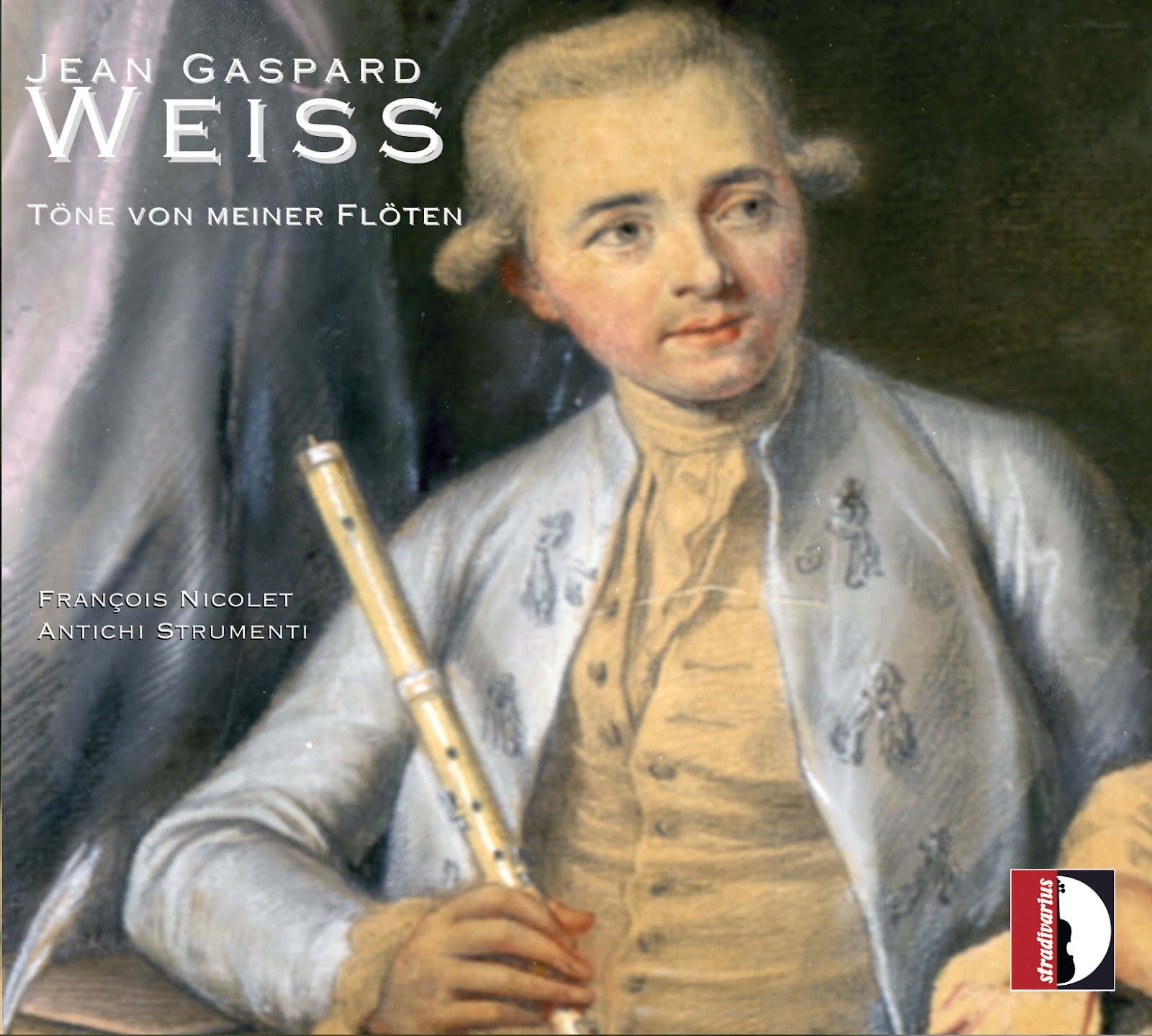
A CD of Gaspard Weiss' music

A new CD has just been released by Stradivarius of my great great great great grandfather Gaspard Weiss' music. This is the first CD ever dedicated solely to Weiss' music. I have ordered a number of copies from Tobias Bonz of Antichi Strumenti, the ensemble who performed on the CD. I can't wait to get my very own copy and play it!

Should you be interested, you can listen to excerpts of the tracks here. I didn't expect that I would like it so much! Not being hugely learned in music, I was envisaging something like Jane Rutter's flute music, which really does nothing for me. However, the German flute played in the pieces sounds, to my ear, a whole lot more like a recorder than today's flute. Plus, I do like that era of music. I recommend it wholeheartedly. Beautiful, beautiful.

The CD is available from Stradivarius, Antichi Strumenti and on iTunes.

21 June 2012

Sarah Horsey, greengrocer

Carole from Heritage Genealogy posted on council rates assessment books the other day, and I was totally unaware that they were available. Both the City of Sydney Council Rates Assessment books 1845-1948 (transcriptions and images) and the Newtown Rates and Assessments 1863-1892 (transcriptions) are available online.

Looking up some of my ancestors, I knew that Josiah Horsey worked as a corn and hay dealer in George Street, Sydney, and also owned a fruit shop in Hunter Street, so I started off with him. He and his wife Sarah are listed a number of times.

Year Name of ratepayer Name of building owner Address Building type Building description Annual Value
1855 Josiah Horsey Samuel Oakley 499 George St House Wood and shingle, 1 floor, 3 rooms £50
1856 Josiah Horsey Saml Oakley 499 George St House Wood and shingle, 1 floor, 3 rooms £50
1861 Josiah Horsey John Woods 46 Hunter St House and shop Brick and galvanised iron, 1 floor, 2 rooms £60
1867 Sarah Horsey John Woods 46 Hunter St House and shop Brick and shingle, 1 floor, 4 rooms, out of repair £76
1877 Sarah Horsey D Clarkson 183 Liverpool St House Brick and iron, 1 floor, 4 rooms £50
1880 Sarah Horsey Thomas Buckland 183 Liverpool St Shop Wood and iron, 2 floors, 6 rooms £72

Correlating this with entries in the Sands Directories I found the following:

Josiah was working as a fruiterer/greengrocer at 46 Hunter Street from around 1861 until (presumably) his death in 1863. His wife Sarah then took over the business and stayed at 46 Hunter Street until at least 1869, even though the conditions of the building were clearly deteriorating. We then have a gap of almost 10 years where Sarah apparently disappears and then she pops up again in 1877 at 183 Liverpool Street, once again as a fruiterer, though 1879's Sands Directory describes her as a dealer - presumably the shop had morphed into a "mixed business". By 1880 (the year Sarah died) the business was obviously doing well enough to have taken on quite a bit more of the building, with 2 floors and 6 rooms instead of 1 floor and 4 rooms. Or possibly extra space was taken up by Sarah and Josiah's youngest son, Josiah jnr, who was listed in 1880 at the same address as a hay, corn and produce dealer, the same occupation his father once had.

As for the missing years for Sarah, I've searched and searched and searched. I wondered if she might have ended up in the clink for some reason, though there's no evidence of that. There are a few clues in Trove though.

In December 1864 a Sarah Horsey, greengrocer, was convicted of having light weights in her barrow, which she used as a stall, and she was fined 20s plus costs. Although I am aware that there was another Sarah Horsey in Sydney at around the same time - the other was convicted of habitual drunkenness after my 3x great grandmother had died, there is nothing to suggest the other Sarah Horsey was a greengrocer like my relative was. So I think this probably was my Sarah Horsey. It would appear from the fact that she was using a barrow as a fruit stall that she had given up the shop in Hunter Street. Despite her inheritance from Josiah's estate, had she fallen on hard times?

In October 1873 a lost and found notice appeared in the Sydney Morning Herald, for a missing milking cow, advising enquirers to apply to Mrs Horsey, fruit shop, Lyons Terrace. Lyons Terrace was a series of elegant terrace houses in Liverpool Street, opposite Hyde Park. Knowing that Sarah lived and worked at 183 Liverpool Street, a look at Google Maps showed that address was itself opposite Hyde Park. Other advertisements in the Sydney Morning Herald show that there was a fruit shop in Lyons Terrace as early as 1868, although there is no evidence that Sarah owned or managed it at that time. So I think she was probably still working as a greengrocer/fruiterer during the missing years, though where she actually lived, with her children, for some of that time is a mystery. (And as an aside, thinking of Hyde Park today, I do find it amusing to imagine a lost milking cow wandering around the park!)

There is one other reference in the Sydney Morning Herald to a Sarah Horsey that is notable: in November 1876 a Sarah Horsey was fined 20s by the Inspector of Nuisances for allowing unwholesome matter to remain on her premises. Although it does not give an address for this Sarah Horsey, it may have been that she was selling bad fruit or vegetables from her fruit shop, if it was her.

15 June 2012

An engraving of Charles Nicholas Weiss

I borrowed something precious from my great aunt on the weekend. She has in her possession an engraving of Charles Nicholas Weiss. I scanned it, and present it below.


The caption is "Charles N. Weiss. Engraved by F. McCabe from a Drawing by Charles Hayter. London"

Charles Hayter (1761-2 December 1835) was an English artist who specialised in portrait miniatures. He was appointed as a Professor of Perspective and Drawing to Princess Charlotte, daughter of King George IV.

There is very little information available on the engraver McCabe, however I believe he was also known as E.F. McCabe and worked in the 1820s. Two of his engravings are held by the British Museum.

If this engraving was done in the 1820s Weiss would have been about 30-something. The most obvious feature on his face is the hooked nose. Interestingly, my late great aunt, Weiss' great granddaughter, had the same shaped nose.

Edited on 16 June 2012 to add:
It suddenly occurred to me to ask my great aunt what she had known about the subject of the engraving. I rang her this morning and asked her. Her father had believed it was of his grandfather (correct). Family legend said that Charles Nicholas Weiss had gone through three fortunes in his lifetime (possibly correct - who knows?!), and her father was of the understanding that he was "pretty musical" (correct). So despite the family not really having any idea of the fame that Charles Nicholas Weiss had in his day for his flute playing, clearly a little information filtered through, down the generations. My great aunt said that they used to have it framed and hanging on the wall, and then it was put into an album. I'm glad she realised it was important enough to keep!

08 June 2012

William Baumgarten

Samuel Baumgarten (born c1729, died 1798), bassoonist, and his wife Mary (born and died ?) had at least 11 children. I previously have mentioned the three daughters, Marie, Charlotte and Lucinda, whom I have been able to trace further than their baptisms here. Marie was my great great great great grandmother, married to Gaspard Weiss. Although they married in England, Marie and Gaspard moved to Mulhouse, France in about 1783. Marie died in Mulhouse 16 April 1798.

I was looking at Lucinda again yesterday, as the marriage record of her daughter is available to view on FamilySearch. Lucinda Worrall Baumgarten, like her sister Marie, moved to Mulhouse. She married Paul Blech in Mulhouse on 12 November 1787. They had at least three children, one of whom was Lucinde. Lucinde Blech married Auguste Debaute on 9 April 1831 in an unknown French protestant church. I took some time to study the names signed under the marriage record entry, presumably the happy couple, the minister and some witnesses. The names included: Auguste Debaute (the groom), Lucinde Blech (the bride), H Glück, Z? Engel, Laure Glück, Marie Heilmann, Le Lieutenant Gen.al B? ??? (can't read it all, but very intriguing!), [squiggle] Baumgarten, ? Debautes, S. Baumgarten Dollfus, Julie Roederer, ? Roederer, David Roederer, J. Kohler and P. Heilmann.

It was the Baumgarten surnames that caught my eye. Although the mother of the bride's surname was Baumgarten (Lucinda) and also her aunt's (Marie), I didn't expect to see any Baumgartens there, unless a male member of the Baumgarten family had come across from England too.

Googling "Baumgarten" and "Mulhouse" revealed a number of Mulhouse-related genealogy websites, mostly the same ones that come up when searching for "Weiss" and "Mulhouse". And I found a William Baumgarten who married an Anne Catherine Schlumberger, but the most telling point was that William Baumgarten was "l'époux est originaire de Londres (Grande-Bretagne)" - he was originally from London, Great Britain, and was also born in approximately 1762. Marie, Lucinda and Charlotte Baumgarten had a brother William who was born around 1764 (at least, that's when he was baptised).

A search on Gallica revealed a couple of references to a William Baumgarten of London in a cartulary for the Schlumberger family, including one which noted that he had a personal fortune of 36000 livres (a lot of money). So where did his fortune come from? I have found no references to him back in England. Was it an inheritance, from his father? Could his father, a professional bassoonist and bassoon teacher have possibly earned enough to leave an inheritance like that to one of his children?

Looking for other Baumgartens on FamilySearch in the same collection as the marriage record for Auguste Debaute and Lucinde Blech (France, Protestant Church Records, 1612-1906), I came across an entry which referred to a Baumgarten and a Schlumberger - "Guillaume Baumgarten" and "Catherine Schlumberger." Guillaume is the French version of William, plus its definitely possible that an Anne Catherine might go by her second name... Looking at the actual record (a marriage record for Guillaume and Catherine's son Médard) it recorded the place of birth of Médard as Mulhouse. Bingo! So I think we can assume that William/Guillaume Baumgarten moved to Mulhouse from London, and was most likely the brother of Mulhouse residents Marie Weiss née Baumgarten and Lucinda Blech née Baumgarten.

The final two things I was curious about were (a) which of the Baumgarten siblings arrived in Mulhouse first, and (b) considering we don't know where Samuel Baumgarten was born, was it likely that they were returning to their father's birthplace?

Gaspard Weiss returned to Mulhouse with his wife Marie and their children in 1783. Both Lucinda and William were married in Mulhouse, France in 1787 - Lucinda on 12 Nov 1787, and William on 9 May 1787. It suggests to me that Marie arrived in Mulhouse first, William and Lucinda followed at some stage, met people, fell in love, married and stayed. As for whether Samuel Baumgarten originally came from Mulhouse, I can't find any records of Baumgartens in Mulhouse going back as far as his reputed dated of birth, so it's unlikely.

01 June 2012

Thomas Wickham, butcher of Margate, Kent

I was contacted by a descendant of Thomas and Rachel Wickham yesterday, seeking more information about the family, which got me searching a little further. It goes to show, send me an email and I might do some research you are interested in!

I have previously written about Thomas Wickham (1811-1897), the patriarch of the Australian branch of my Wickham family here and here. I was searching for information on him or his children on FamilySearch today and discovered three entries for the birth of his firstborn son Thomas (1836-1911). One entry, under "England, Births and Christenings, 1538-1975" just gives his date of birth, the other two are from the "England and Wales, Non-Conformist Record Indexes (RG4-8)", one of which gives his birthplace as No 7 Market St, Margate, Kent, the other gives it as Cripplegate, London. I think the reason for the discrepancy here is because Cripplegate is where Dr William's Library is, which is where the records for some of the non-conformist churches (Baptist, Congregational and Presbyterian) were held (they are now held by the UK National Archives).

This is interesting on two points. The first is that the Wickhams clearly attended a non-conformist church, though of which variety I have no idea. Unfortunately I have not been able to find definite birth records for any of Thomas and Rachel's other children, which may or may not have helped me to narrow it down. I do know, however, that Thomas and Rachel's son Robert Wickham was married to Annie Jane Smith by the minister of the Waterloo Congregational Church (Sydney). So perhaps the Wickhams were Congregationalists.

The second reason why this is interesting is because it names the actual place Thomas Wickham jnr. was born (in 1836) - 7 Market St Margate. Google Street View shows that the building currently at that location houses a Chinese restaurant! A search of historical directories shows Thomas Wickham, butcher, at 6 Market St, Margate in the Pigots Directory of 1840. I have found no other references to the Wickham's place of work or residence in Margate anywhere else. I don't know if 6 and 7 Margate St were beside each other or roughly opposite, but looking at the buildings in the street now, it is my guess that the Wickhams lived in the same building as the butcher shop. Perhaps Thomas jnr was born in a neighbour's house (someone who could help first-time-mother Rachel through the labour?) or perhaps they moved within the same street. I think the former option is more likely.